- Share


Paper Trading 101: Why Practising With Fake Money Is the Real First Step
Imagine if you could learn to drive without ever risking a real crash. Imagine if every beginner pilot could log a hundred hours in the cockpit before strapping in for a real flight. That's what paper trading is for investing — and most people skip it.
This guide explains exactly what paper trading is, what it does and doesn't teach you, the most common mistakes people make with it, and how to know when you're ready to graduate to real money. If you're considering investing for the first time, this is the lowest-risk move you can make.
What paper trading actually is
A paper trading account is a simulated brokerage account funded with virtual money (usually $10,000 or $100,000 in fake dollars). It uses real, live market data — the same prices, the same order book, the same news flow as the real market. The only thing that's fake is the money.
When you place a buy or sell order, the simulator fills it at the actual market price at that moment. Your portfolio rises and falls with real-world events. If Tesla drops 8% because of an earnings miss, your simulated Tesla position drops 8%. The experience is indistinguishable from real trading, except for the actual money flowing in or out of your bank account.
What paper trading is genuinely good for
1. Learning the mechanics
Modern brokerage interfaces are dense. There are dozens of order types, hundreds of charts, sorting options, watchlists, alerts. Trying to figure that out for the first time while real money is on the line is a recipe for expensive mistakes — typing the wrong ticker, buying 100 shares when you meant 10, setting a stop-loss the wrong direction.
Paper trading lets you click every button and break every screen for free. By the time you fund a real account, the interface should feel like a second language.
2. Building emotional resilience
This is the underrated one. The single biggest difference between successful long-term investors and unsuccessful ones isn't strategy — it's the ability to stay calm when markets are falling. And the only way to learn that is to live through it.
Even in a simulator, watching your portfolio drop 15% over two weeks triggers real emotional responses. You learn what your panic threshold actually is. You learn whether you can hold or whether you start refreshing the app every 10 minutes. Better to discover that pattern when no real money is at risk.
3. Testing strategies before betting on them
Have an idea? "I think tech stocks will outperform." "Dividend stocks are the way." "I'll buy the dip whenever the market drops 5%." Test the strategy in the simulator for three to six months. See if it actually works. See if you can actually execute it consistently when your gut is screaming the opposite.
4. Understanding portfolio behaviour
How does a portfolio with 20 stocks behave differently from one with 5? What does adding international exposure do? How does rebalancing actually feel? These are questions you can't answer with theory — you need to live it. Paper trading lets you compress years of portfolio experience into months.
What paper trading doesn't teach you
Be honest about its limits. The biggest one is psychological. Even when a simulator portfolio drops 30%, you know in the back of your mind it's fake. The real version of that drop — when it's your actual savings, the money you were planning to use for a deposit on a house — hits differently. Some traders who paper trade brilliantly fall apart with real money. The transition is its own skill.
Paper trading also can't teach you:
- FX and fee friction. When you trade real US stocks from Mauritius or elsewhere in Africa, every transaction has currency conversion costs the simulator doesn't show.
- Tax consequences. Real capital gains have tax implications that simulators ignore.
- Withdrawal patience. Knowing you can't access the money for weeks during a withdrawal hold changes behaviour.
- Position-sizing relative to your actual net worth. A 10% position in a $10,000 simulator feels different from a 10% position in your real life savings.
The four mistakes people make in paper trading
1. Treating it like a video game
Because there's no real money on the line, people take wild risks they'd never take with real money — going all-in on penny stocks, using maximum leverage, day trading volatile names. You can "win" the simulator this way, but you learn nothing transferable. Trade the simulator exactly the way you would trade real money.
2. Stopping too early
Two weeks of paper trading teaches you almost nothing. You want to see at least one earnings season, one significant market dip, and one recovery before you have real intuition for how stocks behave. Plan on at least 60 to 90 days before switching to real money.
3. Not journalling trades
Every trade should have a written reason before you place it, and a written review after you close it. Without that, you learn nothing — the brain rewrites its own history to make the trader look smarter than they were. A simple notebook or spreadsheet beats no journal every time.
4. Refusing to graduate
Some people paper trade for years because real money feels too risky. At some point, you've learned what the simulator can teach you. The next lessons only come from real money, even if it's a small amount. Don't get stuck in the safe harbour forever.
How to know you're ready for real money
You're ready when:
- You've traded the simulator for at least 60 days
- You've lived through at least one 5%+ market drop and held your positions
- You can articulate, in one sentence, why you own each position you hold
- You have a written strategy you've followed consistently for at least 30 days
- You have an emergency fund covering 3–6 months of expenses outside any investments
If you check all five boxes, fund a real account with an amount you're emotionally fine losing entirely. Start small. Trade exactly the same way you traded the simulator. The transition should feel anticlimactic, not exciting — that's a good sign.
Where to paper trade
There are several international paper trading platforms: Webull, TradingView, NinjaTrader, ThinkOrSwim. Most are built for US-resident users and don't address the specific situation of African investors who plan to trade US stocks remotely.
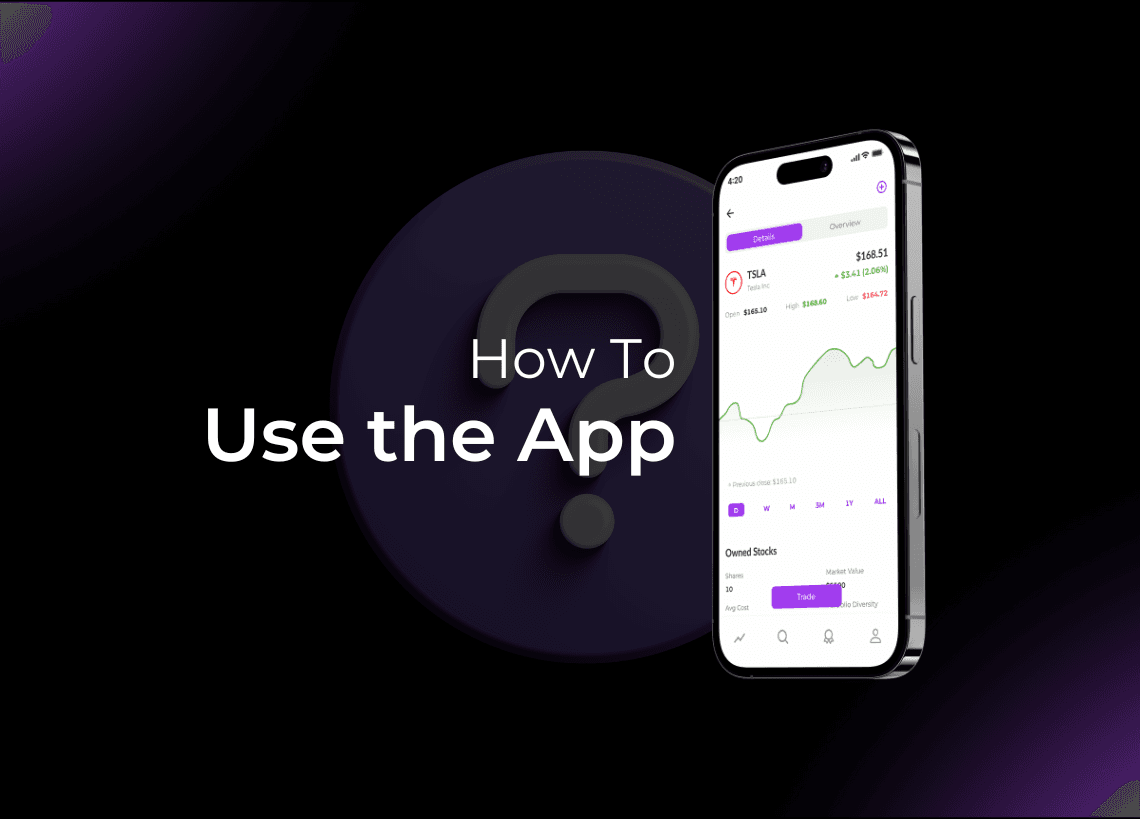
Zunko is built from Mauritius for exactly this audience. The simulator uses real-time US market data, gives you a $10,000 virtual portfolio, and pairs it with a learning path designed specifically for Mauritian and African first-time investors. The same interface, account, and habits carry over when you graduate to real-money trading.
The best time to start practising was 10 years ago. The second-best time is this weekend. The simulator costs nothing. The lessons it teaches will pay you back for the next 40 years.
Start paper trading today. Download Zunko and get your $10,000 simulated portfolio with real US market prices.