- Share


A Beginner's Guide to Buying US Stocks From Mauritius and Africa
Owning shares in the most successful companies on Earth used to be the privilege of people who happened to live near US capital markets. That's no longer true. From Port Louis, Lagos, Nairobi, or Johannesburg, you can buy fractional shares of Apple, Microsoft, or NVIDIA in the same time it takes to order a meal on a food delivery app.
But the process has friction the headline ads don't mention — KYC requirements, currency conversion costs, US withholding tax on dividends, brokerage selection, and the right way to fund and withdraw. This article walks through the practical end-to-end.
Why bother with US stocks at all?
Three reasons stand out for African investors:
- Scale and diversity. The US market has more than 6,000 listed companies across every industry. Local African exchanges combined have a fraction of that. You can construct a genuinely diversified portfolio in the US that you simply can't build locally.
- Where the growth is. Most of the companies driving the global economy — Apple, Microsoft, NVIDIA, Amazon, Google, Tesla, Meta — are US-listed. Owning a small piece of them is owning a small piece of global growth.
- Currency diversification. Holding USD- denominated assets gives African investors a hedge against local currency depreciation, which most African currencies have experienced over the long term.
The path, step by step
Step 1: Choose a brokerage that accepts your country
Not every US brokerage will open accounts for African residents. The major ones that do (as of 2026):
- Interactive Brokers — accepts most African countries, low fees, world-class platform, steeper learning curve
- Charles Schwab International — accepts some African countries with a $25,000 minimum
- local-to-US bridge platforms — like EasyEquities (South Africa), Bamboo (Nigeria), Hisa (Kenya), and Zunko (Mauritius/regional) — let you trade US stocks via a local interface that handles the FX and custody for you
For most first-time African investors, the local bridge platforms are easier — local-language support, mobile-first UX, lower minimum funding, no need to wire money to a US bank. The trade-off is slightly higher per-trade costs and a smaller universe of available securities.
Step 2: Complete KYC
Every brokerage, US or African-bridge, must verify your identity. You'll typically need:
- National ID or passport
- Proof of address (utility bill, bank statement, lease) issued within the last 3 months
- Tax identification number for your country
- A selfie or live verification
The KYC step is often the most frustrating part of opening an account. Document quality matters — bad photos get rejected. Allow a few days for review. Most African-bridge platforms approve within 24–48 hours; international brokerages can take a week or more.
Step 3: Fund the account
This is where the costs hide. Funding methods:
- Local bank transfer to a local-to-US bridge:Cheapest. You transfer rupees (or naira, KES, ZAR), the platform converts internally and you trade in dollars.
- International wire (SWIFT) to a US brokerage:Direct and clean, but expensive — your bank typically charges Rs 1,000–3,000 per outbound wire plus an FX spread that can be 1–3%. Your destination bank may also deduct a receiving fee.
- USD card top-up: Some platforms accept Visa/Mastercard funding. Convenient but usually the worst FX rate. Avoid for amounts above $200.
- Crypto bridge: Some investors convert local currency to USDC and bridge to brokerage USD balances. Can be cheap if you know what you're doing; can be a security nightmare if you don't.
Step 4: Make your first trade
US markets open at 9:30am Eastern Time and close at 4:00pm ET. That's 5:30pm to midnight in Mauritius, 4:30pm to 11pm in Lagos and Johannesburg, 5:30pm to midnight in Nairobi. Most beginners try to place orders during the day and find their orders sitting unfilled. They're queued — they execute when markets open.
For your first trade, place a small market order on a large, liquid stock during US market hours. Watch how quickly it fills. Watch the price update in real time. This is the moment investing stops being theoretical.
The tax piece (Mauritius specifically)
Three taxes affect Mauritian investors in US stocks:
1. US withholding tax on dividends
The US automatically withholds 30% of any dividends paid to non-US residents. The US-Mauritius tax treaty reduces this to 15% if you submit a W-8BEN form (your brokerage will provide and process this). Without the W-8BEN, you lose 30% of every dividend.
2. No US tax on capital gains
The US does not tax non-residents on capital gains from stock sales. The full proceeds (minus your broker's fees) come to you. This is a substantial advantage of US stock investing for foreigners.
3. Mauritian tax treatment
Mauritius has no capital gains tax on stocks. Dividends received are also not taxed at the Mauritian level (you may have already had US withholding tax applied, which covers the foreign component). This keeps the post-tax return on US stocks competitive for Mauritian residents.
The W-8BEN form: do not skip this
The W-8BEN is the IRS form that tells the US system you're a non-resident eligible for treaty benefits. It cuts your dividend tax in half. Your brokerage will prompt you to complete it during onboarding — fill it out carefully. It needs to be renewed every three years.
Common mistakes African investors make with US stocks
1. Ignoring FX cost
A 2% FX spread on every fund-in and fund-out adds up fast. If you cycle Rs 10,000 in and out three times in a year, you've lost Rs 1,200 to FX alone — more than many beginner portfolios earn in capital gains in their first year.
2. Trading on local market hours
Some platforms accept orders during local daytime and queue them for US market open. Others reject them or fill at terrible prices during low-liquidity periods. Place orders during the actual US session for the best fills.
3. Skipping the W-8BEN
Doubling your dividend tax for the sake of skipping a five-minute form is one of the most common — and most avoidable — leaks. Always submit it.
4. Over-trading
Each trade has implicit and explicit costs. African investors paying small FX spreads on every transaction can easily turn an 8% market return into 4% after-cost return by trading too often. Most beginners trade 5× more than they should.
5. Not understanding the product
ADRs, ETFs, REITs, MLPs, leveraged ETFs — each has different tax treatment for foreign investors. Stick to plain US-listed common stock and broad ETFs until you understand the specific quirks of more exotic products.
The cheapest path to your first trade
If you're in Mauritius and want to make your first US stock trade with the minimum friction and cost:
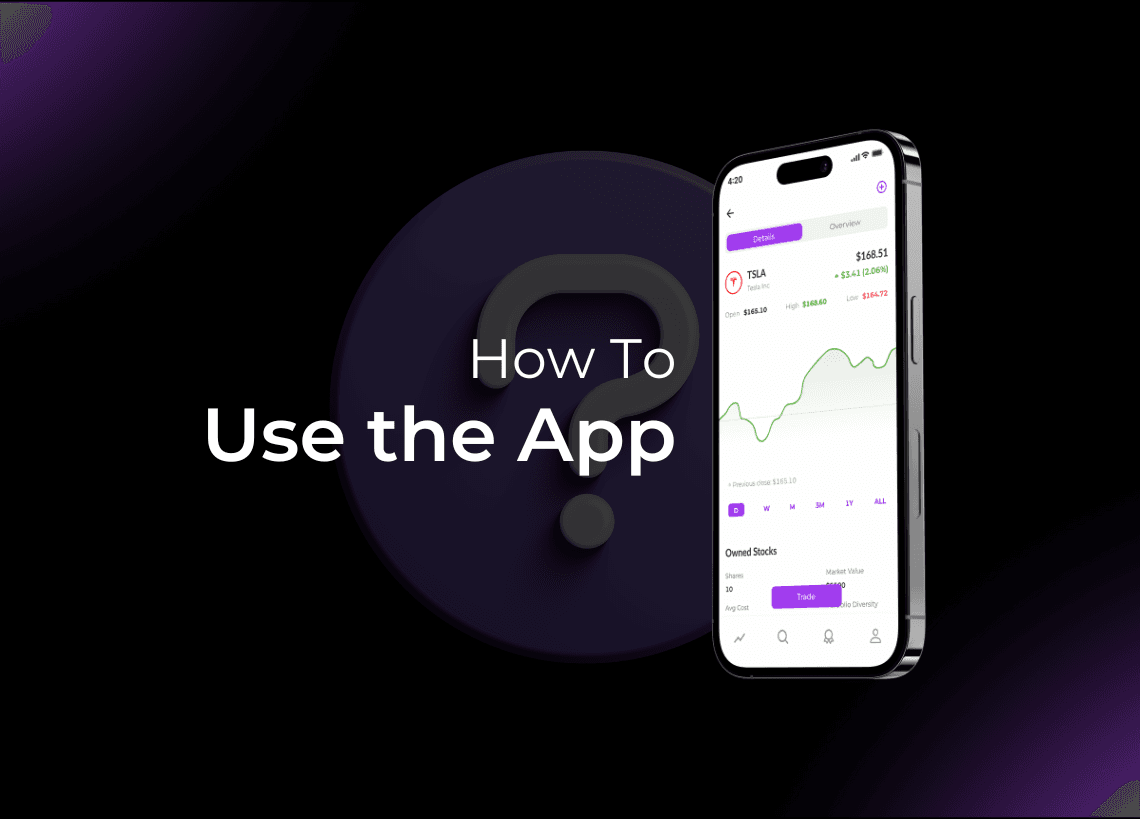
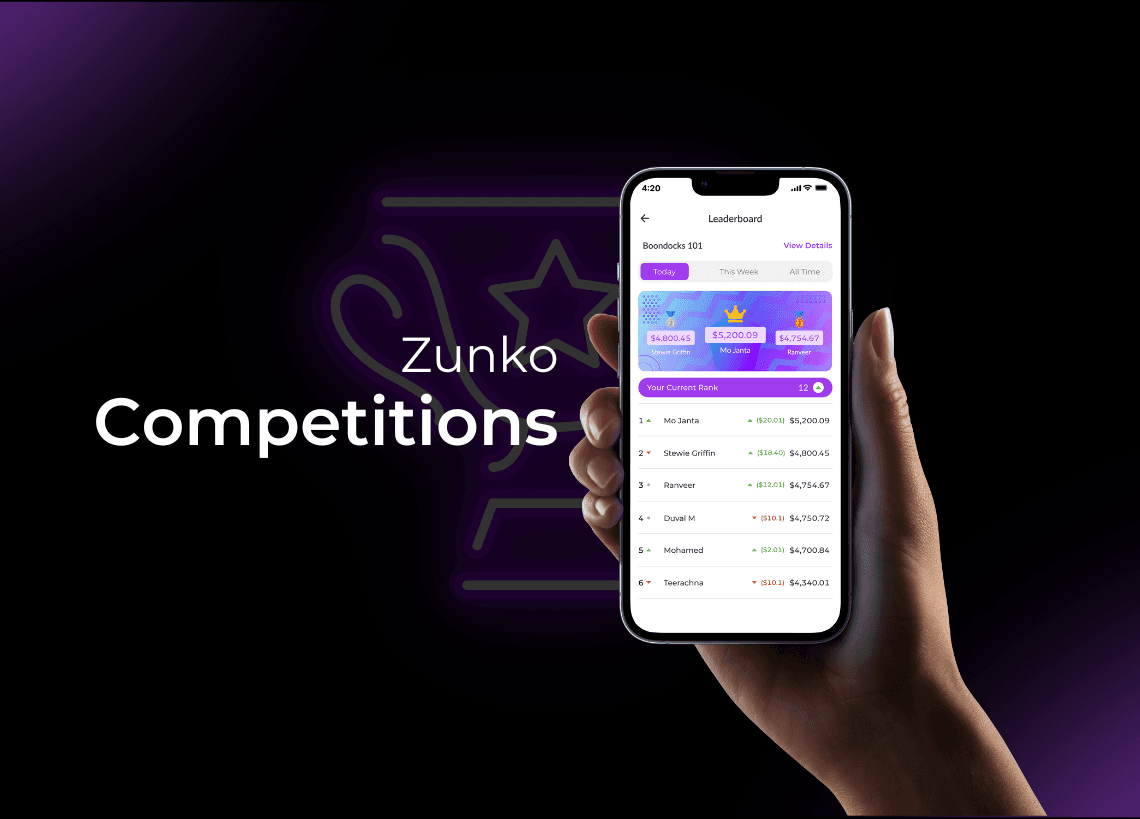
- Start with paper trading on a Mauritian-built platform like Zunko. Practise for 6–8 weeks with the $10,000 virtual portfolio.
- When ready, open a real account on a local-to-US bridge. Submit your W-8BEN during onboarding.
- Fund with a local bank transfer. Start with an amount you're fine losing entirely — Rs 1,000 to Rs 5,000.
- Buy a single fractional share of a large, boring ETF like VOO (S&P 500). Don't day-trade.
- Set up a recurring monthly contribution. Walk away. Check it quarterly, not daily.
That's the entire playbook. The hardest step is the first one — getting through KYC and placing the first trade. After that, the rest is just consistency over decades.
Practise first, then invest. Download Zunko and get $10,000 in paper money with real US market data — the simulator is purpose-built for Mauritian and African beginners.