- Share


Why Most Mauritians Don't Invest — And Why That's Finally Changing
If you survey 100 working Mauritians under the age of 40, roughly 90 will say they want to build wealth. Roughly 70 will say they know they should be investing. And fewer than 20 actually are.
That gap — between intention and action — isn't unique to Mauritius. It shows up across most of Africa. But the specific reasons it persists here are worth understanding, because they're finally starting to break down. This article looks honestly at why investing has been slow to take hold in Mauritius, and what's changing for the next generation.
The cultural defaults
1. Real estate as the only "real" investment
Walk through any Mauritian family conversation about money and the conclusion is usually: buy land. There's a deep cultural anchor here — land in Mauritius has been scarce, prestigious, and historically lucrative. Generations of families have built wealth through property accumulation, and that's a real success story.
The problem is that it's become the only default. Other forms of investing — stocks, ETFs, bonds, even diversified funds — are treated with suspicion, as if they're inherently riskier than concentrating your entire net worth in a single property in a single neighbourhood. The math doesn't support that view, but the cultural reflex is strong.
2. Savings accounts treated as wealth-building
The most common "investment" instrument in Mauritius is a fixed deposit at a local bank, paying somewhere between 2% and 4% per year. Inflation has averaged 4–6% over the past decade. The math means most fixed deposits lose real purchasing power every year — you're paying the bank to slowly make you poorer.
Most savers don't do that math because banks don't advertise it. The notification you get says "Interest credited: Rs 1,200." The notification you don't get says "Real purchasing power lost to inflation this month: Rs 2,400."
3. The "markets are gambling" narrative
A lot of older Mauritians genuinely believe stock markets are casinos. Part of this comes from limited exposure — if your only experience of stocks is the dot-com crash or the 2008 financial crisis on the news, "risky" feels like the right word.
Part of it comes from a small number of public stories about local investors who bought a hot stock on a tip and lost their savings. Those stories travel far. The quieter, more common story — of patient index investors compounding 8% a year for 30 years — doesn't make the news.
The structural barriers
1. Limited local market depth
The Stock Exchange of Mauritius has roughly 200 listed securities, dominated by hotel, banking, and sugar companies. It's a fine market for institutional investors and high-net-worth individuals, but the combination of low liquidity, narrow sector coverage, and high transaction costs makes it impractical as a starter market for retail investors.
If you wanted to build a properly diversified portfolio with Rs 50,000 entirely within Mauritius, you'd struggle — and the fees on each transaction would eat a meaningful percentage of your capital. Most Mauritians who try local-only investing have a frustrating first experience and stop.
2. Friction to access international markets
For most of the 2000s and 2010s, accessing US or UK markets from Mauritius required wiring large sums to offshore brokerage accounts, navigating English-language KYC processes, paying SWIFT fees, and accepting FX spreads of 2–3% per transaction. The all-in friction meant only people with significant capital and patience bothered.
That's changed dramatically in the past 3–5 years. Mobile-first platforms, fractional shares, low-cost FX, and local-to-US bridge brokerages have collapsed the barriers. Today a 22-year-old can open an account in 15 minutes and buy fractional Apple shares with Rs 100. The infrastructure is finally there. The cultural lag is closing.
3. The financial literacy gap
Mauritian schools teach almost nothing about personal finance. The average student leaves secondary school without knowing what a P/E ratio is, what compound interest does, or how dividends work. The expectation is that you'll figure it out from your parents, which is fine if your parents are investors and a problem if they aren't.
This is the most fixable barrier. Self-study, well-designed onboarding flows in modern apps, and cohort-based learning (like the university programs rolling out across Mauritian campuses in 2026) are bridging it faster than any policy change ever did.
What's changing for the next generation
1. Smartphones as financial infrastructure
Mobile penetration in Mauritius is over 95%. The technical capacity to manage a US brokerage account is now in everyone's pocket. The cost of opening an account has dropped from "several thousand dollars and a wire transfer" to "Rs 100 and a 15-minute KYC."
2. Localised content and apps
For the past 20 years, the best investing content was written for US audiences with US assumptions about taxes, retirement accounts, and brokerage options. African investors had to translate every recommendation to their context. That's changing — Mauritian and African-built platforms now design their education and product around the local situation. The advice finally fits the audience.
3. Visible early adopters
When your friend starts investing and shows you how it actually works on their phone, that's more persuasive than any campaign. The early adopter cohort in Mauritian retail investing is now large enough that most working professionals under 35 know at least one active investor in their social circle. That network effect compounds quickly.
4. The funded-trade and competition models
Programs that combine paper trading with real-money prize allocations — including Zunko's university cohort competitions, where top students win $50 in real funded trades — bridge the psychological gap between "I'm practising" and "I own real stock." The moment you hold an actual share of Apple, even worth only $30, the abstraction breaks. You're an investor.
What this means if you're reading this in Mauritius today
The barriers your parents faced are mostly gone. The cultural assumptions — that stocks are gambling, that real estate is the only real investment, that you need a lot of money to start — were rational responses to an environment that no longer exists.
If you're 25, 30, 40 today and you haven't started investing because the friction looked too high or the knowledge gap felt too big, those reasons no longer hold. The friction is approximately zero. The knowledge is freely available. The minimum is $1.
The honest reason most people still don't start is that starting is uncomfortable. It involves admitting you don't know things. It involves making decisions that might be wrong. It involves watching numbers go up and down. None of that is fatal, but all of it requires getting over the inertia of doing nothing.
The good news is that doing nothing isn't neutral — every year you wait, your savings lose purchasing power, and the compounding window narrows. Doing something, even badly, beats doing nothing perfectly.
The next generation of Mauritian investors will be wealthier than ours not because they're smarter, but because they started 20 years earlier. There's nothing stopping you from being in that generation, regardless of your age. The window for starting is wherever you are right now.
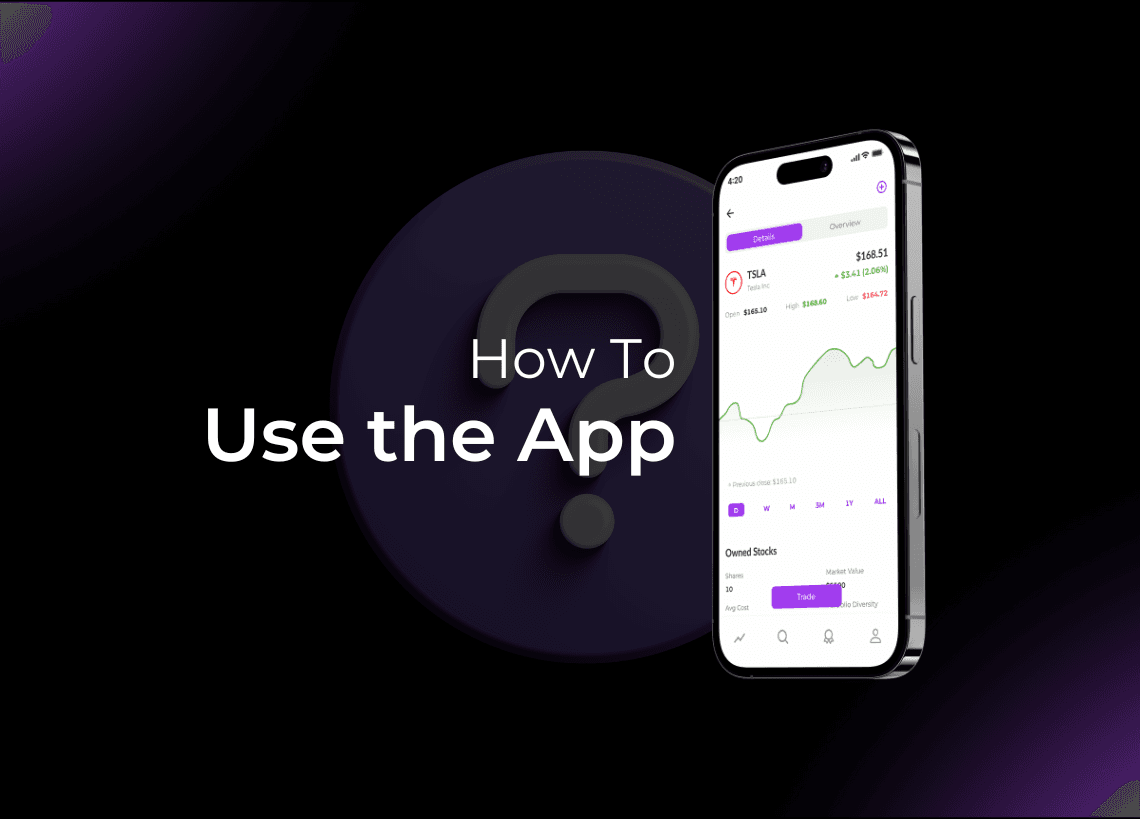
The first step costs nothing. Download Zunko and try the simulator with $10,000 in paper money. Built in Mauritius, for Mauritius (and the rest of Africa).